For years, WWE fans watched wrestlers take steel chairs straight to the skull and thought nothing of it. Metal met bone, the crowd roared, the commentators screamed, and the match hit its peak.
Back then, an unprotected chair shot was a badge of honor. It said you were tough, you were committed, and you’d do anything to make a feud feel real.
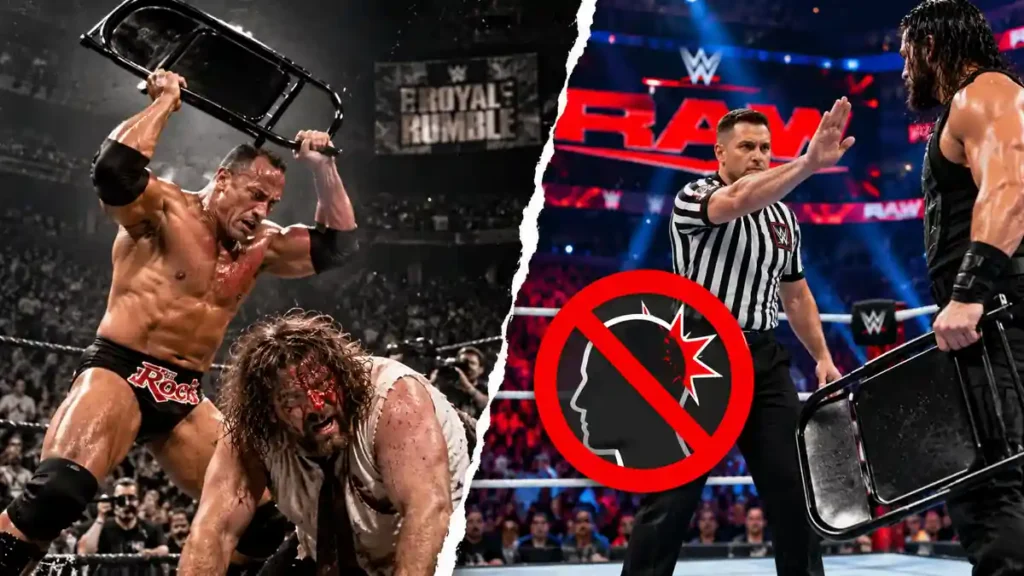
Today that spot is gone from WWE television. Wrestlers still swing chairs at backs and ribs in no-disqualification brawls, but deliberate contact with the head is prohibited.
So, why WWE banned chair shots to the head? The answer lies in medical research, a few ugly wake-up calls, and a much better understanding of brain injury
The Old Code: Take It Flush
From the territory days through the Attitude Era, locker rooms ran on an unwritten rule: you take the shot clean. Raising your arms to cushion a chair could get you labeled “soft” by veterans, or accused of ruining the illusion. So wrestlers learned to plant their feet, face their opponent, and let the seat of the chair land across the forehead.
On screen it looked like drama. In reality it was a hard hit to the head, over and over.
Even when nobody bled, the damage was real. The skull protects the brain, but the brain itself floats in fluid. A hard impact makes it shift and twist inside the skull. One hit might leave you dazed. Hundreds across a touring career add up, and the effects can show up years after the bruises fade. The Mayo Clinic’s overview of chronic traumatic encephalopathy explains how repeated head trauma is linked to long-term brain damage.
The ring is built to soften bumps, but a steel chair gets no such help. We cover that in our guide to how WWE rings are built.
Royal Rumble 1999: The Match People Couldn’t Shake
If one match showed how far things had gone, it was The Rock vs. Mankind in the “I Quit” match at Royal Rumble 1999. With his hands cuffed behind his back, Mick Foley couldn’t defend himself as The Rock hit him with eleven unprotected chair shots to the head.
It was brutal to watch, and the reaction went well beyond the arena:
- Foley’s wife and children were shown at ringside in tears, a moment captured in the documentary Beyond the Mat.
- Plenty of fans and wrestlers later pointed to this match as the moment the violence crossed a line.
- Foley himself has talked openly about the toll that kind of punishment took on his body.
Even so, nothing changed right away. The medical world hadn’t yet connected the dots on repetitive head trauma, so head shots stayed in the business for years.
Chris Nowinski and the Science of CTE
The real push came from inside wrestling. Chris Nowinski, a former Harvard football player who wrestled for WWE in the early 2000s, retired at 24 after repeated concussions left him with lasting symptoms.
Frustrated by how little doctors could tell him, he started digging. In 2007 he co-founded the Sports Legacy Institute with researchers from Boston University, now the Concussion Legacy Foundation. Their work, alongside the Boston University CTE Center, helped bring chronic traumatic encephalopathy (CTE) into public view. CTE is a progressive brain disease linked to repeated blows to the head, found in football players, boxers, military veterans, and others.
The Chris Benoit Case
The wrestling world’s reckoning came in June 2007, when Chris Benoit killed his wife and son and then himself. It was a tragedy, and it pulled wrestling under a harsh spotlight.
Researchers who later examined Benoit’s brain, working with Nowinski’s group, reported severe damage consistent with long-term repetitive head trauma. The case does not explain what happened, and experts caution against reducing it to one cause. But it forced a very uncomfortable question: what had years of ring punishment done to the people taking it? From then on, wrestling’s approach to concussions and head injuries could not stay the same.
How WWE Phased Out the Head Shot
The change was gradual rather than a single switch:
- Late 2000s: WWE introduced its Talent Wellness Program and began pushing wrestlers toward safer habits, including shielding the head with arms or hands during chair spots.
- 2008: WWE moved to a TV-PG presentation. Along with that, it cut down on visible blood and the most graphic violence. Our explainer on how blade jobs worked in WWE covers that shift.
- 2010: WWE formally banned intentional chair shots to the head, with fines and discipline for anyone who ignored it.
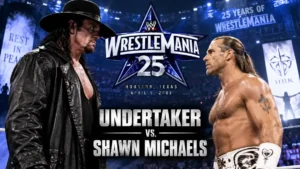
The rule was tested at WrestleMania XXVII in 2011, when Triple H and The Undertaker used head shots in their match. Both men were reportedly fined for it, a sign that even top stars weren’t exempt.
How Chairs Are Used Now
The chair is still a staple of WWE storylines. Wrestlers just get the same intensity from safer spots:
- Back and shoulders: Big muscle groups spread out the impact, so the shot still makes a loud, ugly noise without putting the brain or neck at risk.
- Trapped limbs: Heels jam a chair into a turnbuckle or wrap it around an ankle, getting the crowd’s heat through suspense instead of skull trauma. For more on how great villains build that tension, see our list of the top 5 greatest heels in WWE history.
- Defense: Wrestlers also use chairs as shields against high-flying moves and charging opponents.
Attitude Era vs. Today
| Factor | Attitude Era | Modern WWE |
| Target | Unprotected forehead or skull | Upper back, shoulders, midsection |
| Blocking | Often discouraged | Standard practice |
| After a hit | Many wrestled through symptoms | Concussion screening and medical clearance |
| Rules | Seen as proof of toughness | Banned, with fines |
Frequently Asked Questions
Are WWE chairs real steel?
Yes, they’re standard metal folding chairs. They hit hard, which is exactly why the target area matters so much.
Why do back shots still look so painful?
They are painful. The back’s large muscles spread out the force, but the shot still leaves welts and bruises. The key difference is that it avoids a direct blow to the head.
What does this mean for older wrestlers?
Many veterans have spoken about chronic pain, memory problems, and other long-term issues after years of head trauma. The ban and modern concussion protocols exist so today’s wrestlers don’t face the same outcome.
Sources & Further Reading
- Concussion Legacy Foundation
- Boston University CTE Center
- Mayo Clinic: Chronic Traumatic Encephalopathy Overview
- ABC News: Tests on Benoit’s Brain Show Severe Damage
- Wikipedia: Royal Rumble (1999)
- Wikipedia: WrestleMania XXVII
WordPress & SEO Configuration
- Focus Keyphrase:
why wwe banned chair shots to the head - Secondary Keyphrase:
wwe chair shot ban history - SEO Title:
Why WWE Banned Chair Shots to the Head (History & Science) - URL Slug:
why-wwe-banned-chair-shots-to-the-head - Meta Description:
Why did WWE ban chair shots to the head? Explore the history, Chris Nowinski's CTE research, and how in-ring safety changed. - Tags:
WWE Safety, Chair Shots Banned, Attitude Era, Mick Foley, Concussion Protocols, WWE History
Featured Image Settings:
- File Name:
why-wwe-banned-chair-shots-to-the-head.webp - Alt Text:
Steel folding chair on a wrestling ring canvas representing WWE safety rules

About Gaurav Sharma
I am Gaurav Sharma, founder and the only writer at Wrestling Nightmare. I live in Punjab, India. I have watched professional wrestling since 2000, and for the last 15 years I have followed dirtsheet reporting and the difference between what is shown on screen and what is reported from backstage. I write explainers and labeled opinion on WWE, AEW, and TNA. I credit the outlet that broke a story, and I do not publish unsourced salary figures or private family pieces.
contact@wrestlingnightmare.com