Professional wrestling operates on an industry principle known as “doing the job”—agreeing to lose a scripted match to advance a storyline, build a rival, or protect the company’s long-term business.
While matches are scripted, the negotiations, character equity, and personal egos behind them are entirely real. When top performers feel a planned loss damages their box-office value, ignores logical storytelling, or disrespects their status, backstage standoffs happen.
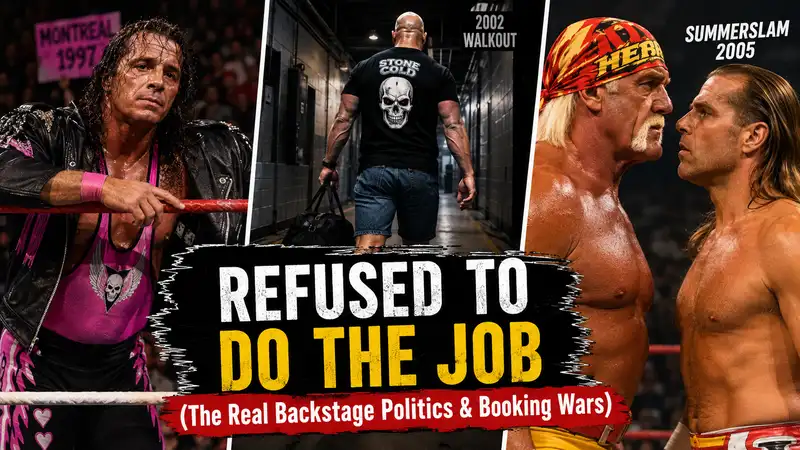
Here is the verified history behind 6 WWE Superstars who pushed back against planned finishes, the backstage politics involved, and how those decisions shaped the wrestling industry.
Summary: Documented Backstage Booking Disputes in WWE
| Superstar | Opponent / Context | The Disputed Booking | Backstage Reason / Outcome |
| Bret Hart | Shawn Michaels (Survivor Series 1997) | Submitting via Sharpshooter in Montreal | Objected to the specific finish/location; led to the Montreal Screwjob |
| Steve Austin | Brock Lesnar (Raw, June 2002) | Unadvertised King of the Ring qualifier loss | Objected to burning a massive match with zero build; walked out |
| Hulk Hogan | Shawn Michaels (SummerSlam 2005) | Proposed multi-match series trading wins | Return match never materialized; Michaels oversold in protest |
| Shawn Michaels | Bret Hart (WrestleMania 13 era, 1997) | Dropping the WWE Title back to Bret | Vacated title citing knee injury (“Lost My Smile”); fueled real-life tension |
| The Road Warriors | The Godwinns / Various (Late 1990s) | Scripted clean television defeats | Protected legendary gimmick status; resisted routine TV jobbing |
| Brock Lesnar | Dean Ambrose (WrestleMania 32) | Proposed complex hardcore street fight | Declined high-risk spots to safeguard upcoming multi-sport priorities |
1. Bret Hart: The Dispute Over Timing and Location (1997)
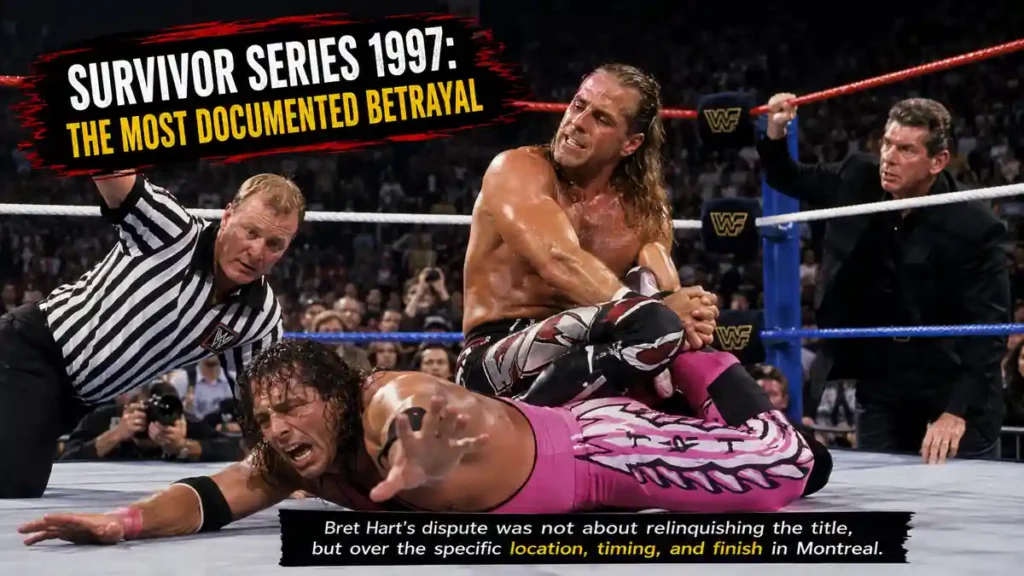
The most documented booking dispute in wrestling history occurred at Survivor Series 1997. Bret Hart was preparing to leave WWE for WCW while still holding the WWE Championship.
Contrary to popular misconception, Hart was not refusing to relinquish the championship. According to extensive firsthand accounts and documentaries, Bret was willing to drop the title on Monday Night Raw, forfeit it, or lose it to other competitors. His objection centered on losing to his bitter real-life rival, Shawn Michaels, in Canada via submission.
When creative discussions reached a stalemate, Vince McMahon executed the Montreal Screwjob, calling for the bell while Michaels held Hart in the Sharpshooter. The fallout fundamentally reshaped wrestling, giving rise to the “Mr. McMahon” character that drove the Attitude Era.
2. “Stone Cold” Steve Austin: The Unadvertised Brock Lesnar Match (2002)
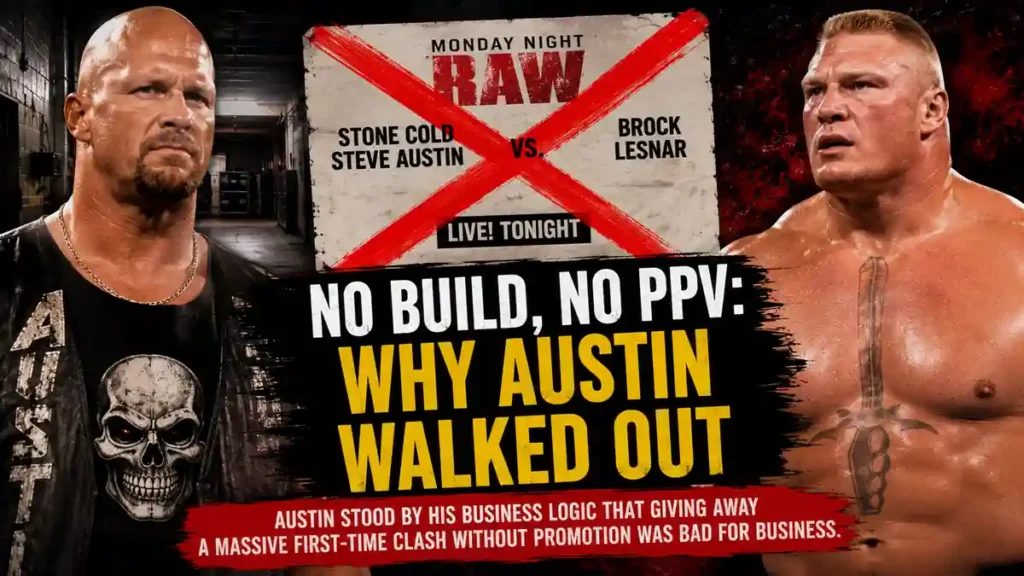
In June 2002, WWE creative pitched an unadvertised King of the Ring tournament qualifier on Monday Night Raw where Steve Austin would lose cleanly to rookie sensation Brock Lesnar.
Austin was not opposed to putting Lesnar over; he fully recognized Lesnar’s immense main-event potential. His refusal stemmed from business logic: Austin believed giving away a potential stadium-caliber, pay-per-view main event on free television with zero build was detrimental to everyone involved.
When management insisted on the finish, Austin walked out of the company. While Austin later acknowledged that walking out was the wrong way to handle the situation, he has consistently maintained that the creative decision itself was terrible business.
📌 Also Read: Wrestlers Who Wasted Their Push, Explained
3. Hulk Hogan: The SummerSlam 2005 Program
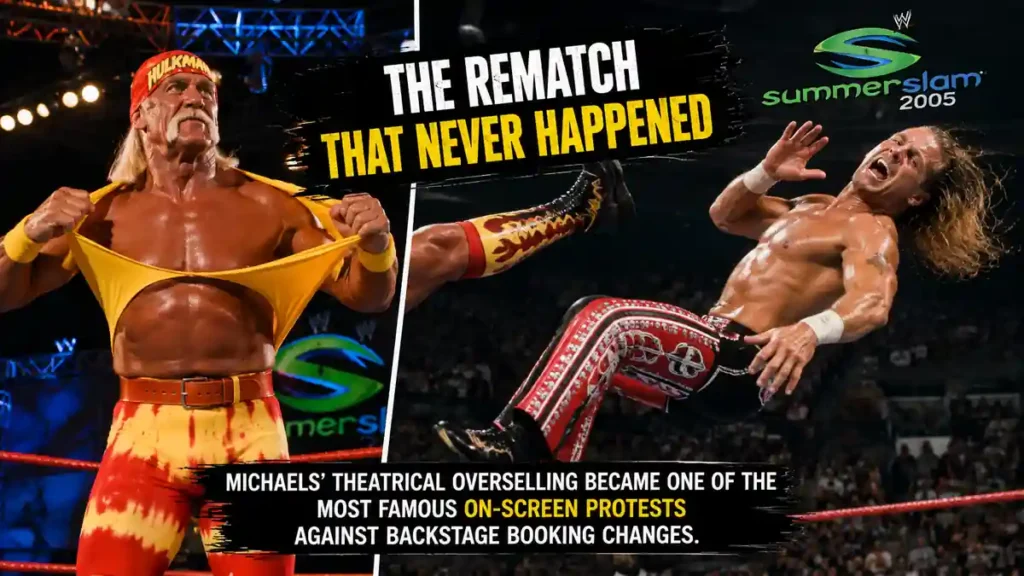
When Hulk Hogan returned to face Shawn Michaels at SummerSlam 2005, the initial creative discussions pointed toward a high-profile multi-match rivalry where both icons would trade victories.
However, as the event approached, plans for the follow-up rematch fell apart, ensuring Hogan would take the sole victory in their marquee singles clash. Frustrated that the original collaborative plan was scrapped, Michaels responded inside the ring by cartoonishly overselling Hogan’s signature offense. While Hogan secured the pinfall, the match remains famous for Michaels’ visible in-ring protest against backstage booking leverage.
📌 Must Read: The Truth Behind WWE’s $500,000 MSG Fine for John Cena vs. Dolph Ziggler
5. The Road Warriors (Legion of Doom): Protecting the Monster Gimmick
Hawk and Animal, collectively known as The Road Warriors (or Legion of Doom in WWE), built their careers on being the most dominant, unstoppable tag team in wrestling history.
Throughout their tenures across multiple promotions, including WWE in the late 1990s, the duo routinely pushed back against creative pitches that involved them taking clean, routine pinfalls on free television. Hawk and Animal understood that their primary merchandising and ticket-drawing value relied entirely on invincibility. While critics occasionally labeled them difficult to book, their protective stance ensured the LOD moniker remained a protected, legendary attraction for decades.
6. Brock Lesnar: Pushing Back on High-Risk Creative (WrestleMania 32)
Leading into WrestleMania 32, Dean Ambrose (now Jon Moxley) actively pitched an intense, weapon-filled No Holds Barred Street Fight against Brock Lesnar, including dangerous spots involving thumbtacks and chains.
Lesnar turned down nearly all of Ambrose’s creative suggestions, keeping the match limited to a straightforward suplex showcase. While not a traditional refusal to lose the scripted match, Lesnar exercised his main-event leverage to shut down high-risk booking. With a lucrative return to mixed martial arts at UFC 200 already in motion, Lesnar prioritized his physical health and multi-sport business interests over collaborative match aesthetics.
📌 Must Read: Brock Lesnar WWE Career: Complete Story, Titles & Legacy
Frequently Asked Questions (FAQ)
What does “doing the job” mean in professional wrestling?
“Doing the job” refers to a wrestler agreeing to lose a scripted match cleanly or decisively to elevate their opponent or advance a storyline.
Did Steve Austin refuse to put over Brock Lesnar?
Austin did not refuse to put over Lesnar as a performer; he objected to having the match take place on free television as an unadvertised qualifier with no storyline build.
Was Bret Hart unwilling to drop the WWE Championship in 1997?
Batista’s experience serves as another reminder that even WWE’s biggest stars don’t always agree with the direction chosen for them. While those disagreements don’t always result in a wrestler refusing to lose, they can still influence storylines, fan reactions, and the company’s creative decisions.

Gaurav Sharma
Founder & Lead Writer, Wrestling Nightmare
I’ve been hooked on wrestling since childhood—from the Attitude Era to today’s Bloodline saga, plus AEW and TNA. My favorite match of all time is The Rock vs. Brock Lesnar (SummerSlam 2002), and I’ll always stand by Bray Wyatt’s untapped potential.
At Wrestling Nightmare, I break down news, analyze matches, and drop verified recaps. Got a correction or wanna debate? Hit me up at contact@wrestlingnightmare.com