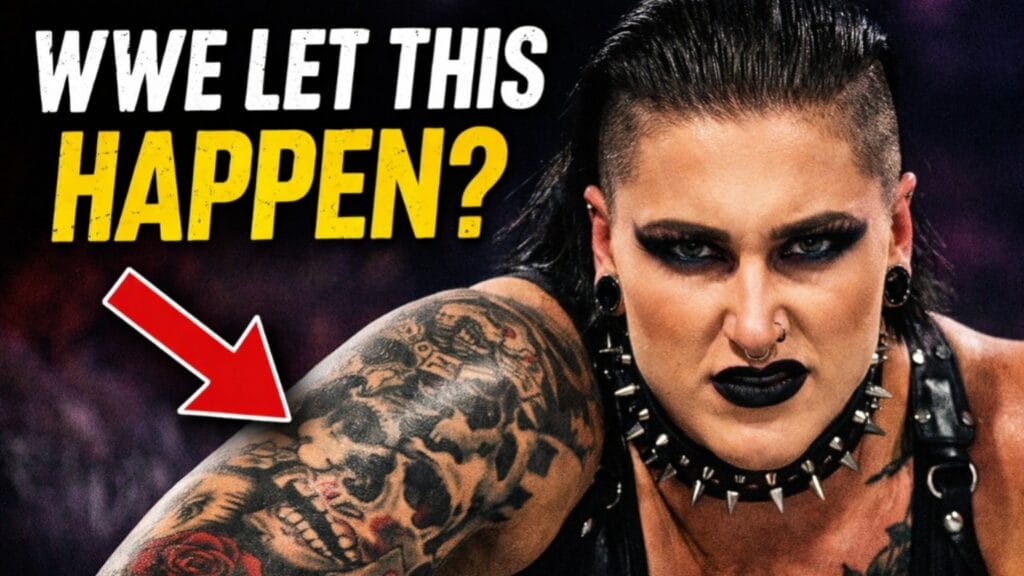
WWE has long treated a performer’s physical presentation with careful scrutiny. Significant changes to hairstyles, signature gear, and prominent body art can affect major licensing agreements, action figure production, and digital likeness rights in video games.
Yet, former Women’s World Champion Rhea Ripley features one of the most prominent and visible tattoo collections on the active roster.
Rather than a case of corporate rules being bypassed, Ripley’s evolving look succeeded because of strategic timing, organic character alignment, and strong audience reception.
Quick Overview: WWE’s Tattoo Nuances & Rhea Ripley’s Evolution
| Factor | Context & Industry Reality |
| Licensing Concerns | Complex copyright disputes over replicating tattoo artwork in video games (WWE 2K) |
| Early Presentation (NXT UK) | Maintained covered lower-body ink using long ring pants and high boots |
| Gradual Transition | Introduced visible upper-body ink as her in-ring character darkened |
| Management Reception | WWE creative leadership, including Triple H, responded positively to the aesthetic |
| Character Synergy | Enhanced “The Nightmare” persona and her role within The Judgment Day |
| Commercial Impact | Organic look resonated strongly with modern wrestling audiences |
The Business Behind Tattoos in Professional Wrestling
WWE’s historic caution regarding visible body art stems primarily from legal and commercial complexities rather than purely traditional aesthetics.
A prominent example involved tattoo artist Catherine Alexander, who filed a copyright lawsuit against WWE, Take-Two Interactive, and 2K Games over the digital reproduction of custom tattoo artwork created for Randy Orton. The litigation highlighted how third-party artist copyrights can complicate video game scanning, merchandise production, and promotional licensing.
Because reproducing distinctive tattoo art across physical and digital media can create legal ambiguities, talent traditionally coordinates significant, highly visible changes with management to ensure commercial clearances remain smooth.
📌 Also Read: Zilla Fatu: 10 Things You Didn’t Know About WWE’s New Star
How Rhea Ripley’s In-Ring Style Evolved
1. Gradual Changes in Developmental
When Ripley competed in the 2017 Mae Young Classic, she maintained a traditional athletic look. As she transitioned into NXT UK and NXT, she began adding extensive ink to her legs.
Because her early ring gear consisted of long pants and high boots, much of this work remained largely covered during television broadcasts. This allowed her presentation to evolve naturally without forcing immediate adjustments to promotional materials.
2. The First Visible Work and Backstage Feedback
In various media interviews, Ripley has shared the story of getting her first major visible arm tattoo—a gothic design—shortly before an NXT steel cage match against Mercedes Martinez.
Ripley noted that while she was anxious about how management might react, executive Paul “Triple H” Levesque noticed the piece during match preparations and responded with immediate enthusiasm. The positive feedback affirmed that the emerging aesthetic suited her developing on-screen persona.
📌 Also Read: Brock Lesnar WWE Career: Complete Story, Titles & Legacy
Why the Look Worked for WWE’s Presentation
Rather than conflicting with her commercial viability, Ripley’s body art actively enhanced her presentation across multiple fronts:
- Authentic Character Synergy: As her character shifted from a traditional babyface into “The Nightmare” and later a cornerstone of The Judgment Day, the heavy ink, dark makeup, and metal-inspired presentation felt entirely natural.
- Strong Fan Connection: Audiences embraced the aesthetic because it aligned with Ripley’s real-life interests in heavy metal and alternative culture, creating a genuine connection with viewers.
- Visual Distinction: In a crowded division, Ripley’s imposing physical presence and distinct visual style helped her stand out immediately on weekly television and pay-per-view broadcasts.
❓ Frequently Asked Questions (FAQ)
Why does WWE monitor superstars’ visible tattoos?
WWE pays close attention to visible body art primarily due to intellectual property and licensing considerations, particularly when replicating custom artwork in video games, action figures, and marketing campaigns.
What inspired Rhea Ripley’s tattoo aesthetic?
Ripley has cited her lifelong passion for heavy metal music, dark fantasy imagery, and alternative culture as the primary inspiration behind her body art.
Did Randy Orton’s tattoos lead to a copyright lawsuit?
Yes. A tattoo artist who designed several of Randy Orton’s signature tattoos filed a copyright infringement suit regarding the unlicensed depiction of those designs in the WWE 2K video game series.

Gaurav Sharma
Founder & Lead Writer, Wrestling Nightmare
I’ve been hooked on wrestling since childhood—from the Attitude Era to today’s Bloodline saga, plus AEW and TNA. My favorite match of all time is The Rock vs. Brock Lesnar (SummerSlam 2002), and I’ll always stand by Bray Wyatt’s untapped potential.
At Wrestling Nightmare, I break down news, analyze matches, and drop verified recaps. Got a correction or wanna debate? Hit me up at contact@wrestlingnightmare.com