
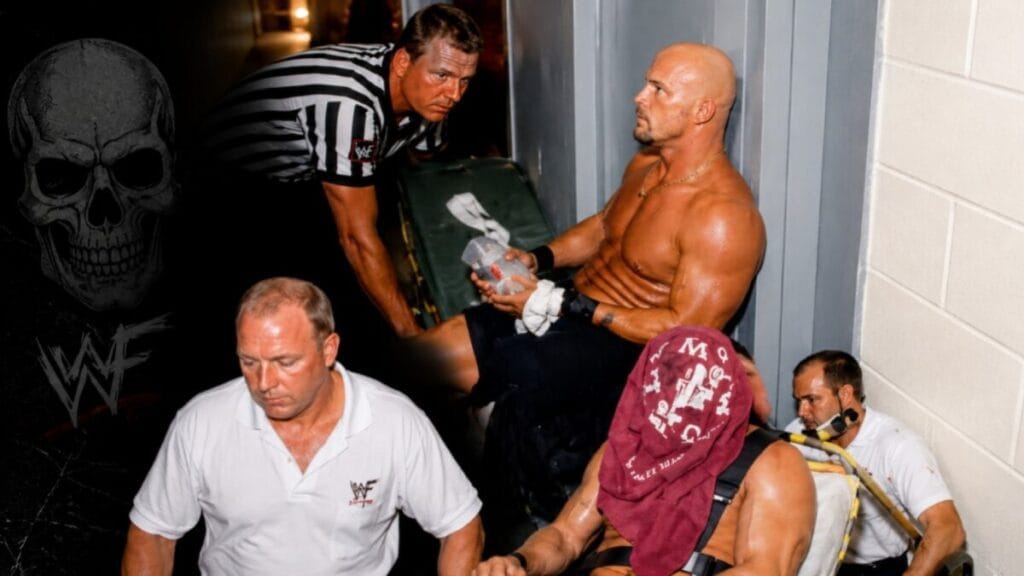
When people think of Stone Cold Steve Austin, they picture an unstoppable force in the ring—a man who drank beer, flipped the middle finger, and beat up anyone who got in his way. But the real story isn’t just about his dominance. It’s about a wrestler who fought the biggest battle against his own body, reinvented himself after doctors told him he might never be the same, and still became a WWE legend despite injuries that could have ended his career before it truly took off.
Most fans don’t realize that Stone Cold’s toughest battles didn’t happen in front of the cameras—they happened behind the scenes. Far away from the roaring crowds, inside hospitals and doctors’ offices, surgeons delivered news that could have crushed any wrestler’s dream. Those injuries didn’t just damage his body—they completely changed the way he wrestled. Stone Cold had to adapt his in-ring style, and that transformation eventually became one of the biggest reasons behind his legendary legacy.
Today, in this article, we’ll take a closer look at the major injuries that shaped Stone Cold Steve Austin’s career and changed his life forever.
The Forgotten WCW Neck Injury That Nobody Talks About
Today, most fans don’t even remember this moment because it happened during Stone Cold’s time in WCW. And to be honest, many WWE fans have almost forgotten that chapter of the company’s history. But in 1995, Stone Cold Steve Austin suffered a triceps injury during a match. At first, it didn’t seem very serious. Like most wrestlers, Austin ignored the pain and kept wrestling.
The real trouble started later. During a routine match, Austin took a suplex that he landed awkwardly, putting serious stress on his neck and shoulder. After medical examinations, doctors discovered that he had developed a serious neck condition. It wasn’t the kind of injury he could recover from quickly. Around the same time, WCW released him. Some doctors even believed that he might never wrestle again. Just imagine hearing, at such a young age, that the one dream you’ve chased your entire life could be over forever.
More than any championship push or storyline, this injury lit a fire inside Stone Cold Steve Austin. He was no longer just fighting his opponents in the ring—he was fighting against everyone who believed his career was already over. That determination brought him to ECW. He had nothing left to lose, but everything to prove. That phase completely changed his wrestling philosophy. He became more aggressive, smarter, and less focused on putting on five-star matches. Instead, his priority became connecting with the audience. During this time, his promo skills also reached another level because he truly had nothing left to lose.
Whenever I debate with wrestling fans who actually lived through that era, they tell me they witnessed all of this with their own eyes. Many of them genuinely believed Stone Cold’s career would end much sooner because of those injuries—but it never happened. Even today, 90s wrestling fans salute his determination and fighting spirit, because they know exactly how impossible his comeback seemed back then.
The Triceps Explosion During His Prime Years
Now let’s move forward to 1998. At this point, Stone Cold Steve Austin was at the absolute peak of his career. Fans were crazy about him. He was headlining WrestleMania main events, and championships almost felt secondary—whether he had a title or not, his popularity was unmatched.
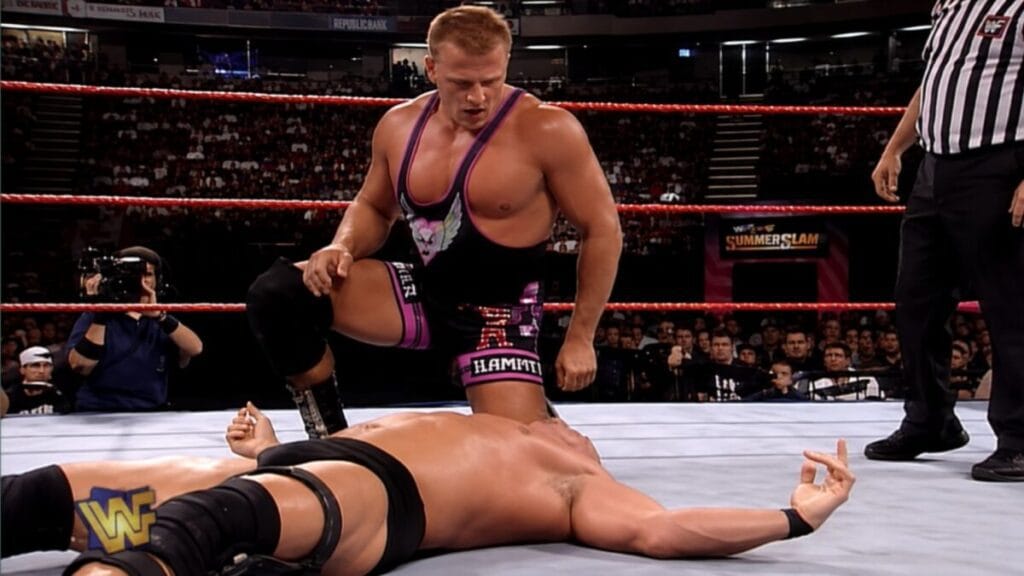
During this period, Austin suffered a triceps injury in a match against Owen Hart. At first, even he didn’t realize how serious the injury was. Like most wrestlers, he ignored the pain and continued competing. But as time passed, the injury kept bothering him, and eventually he had to undergo surgery to repair his triceps.
What made this injury so significant wasn’t just that Austin had to spend some time away from the ring. The real story is what happened after he returned. His entire wrestling style had changed. The wrestler who once relied heavily on technical wrestling transformed his offense into something far more brutal and impactful. His punches looked harder. His stomps carried more anger and intensity. His body could no longer do everything it once could, so he started doing fewer moves—but with much greater impact. Ironically, those physical limitations made him an even more entertaining television performer.
Most fans probably never noticed the change, and they didn’t need to. All they saw was Stone Cold walking into the ring and delivering a brutal beating to his opponents. It looked so believable because Austin was genuinely working around his physical limitations. That real struggle and raw intensity came through the screen, and that’s probably why audiences connected with him on such a deep level—even if they never knew the reason behind it.
Cervical Spine Issues That Hung Over His Career Like a Shadow
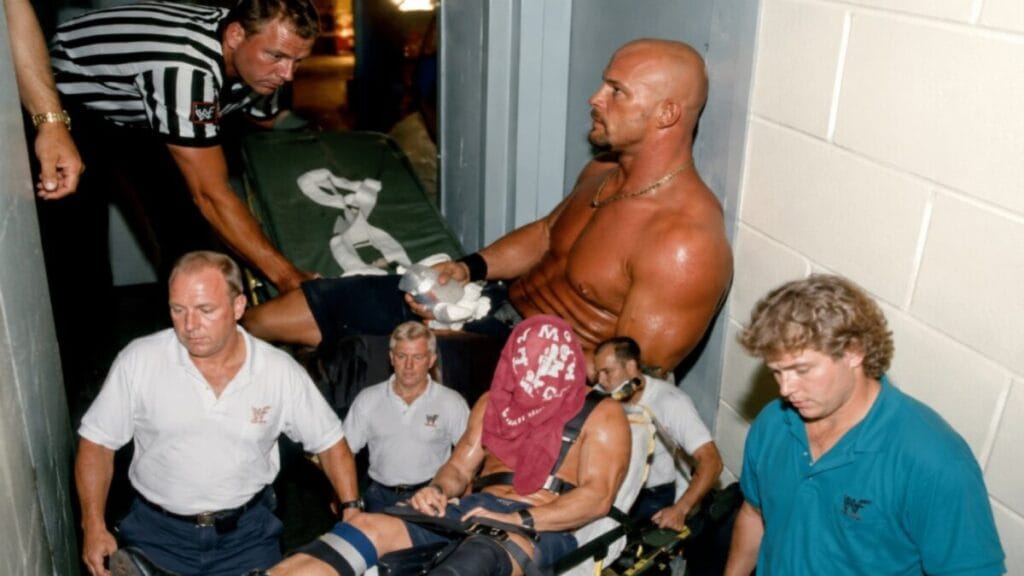
Within the wrestling world, Stone Cold Steve Austin’s neck problem was never really a secret. Wrestlers knew about it, trainers knew about it, and the medical staff were fully aware of the situation. But most fans had no idea what he was dealing with behind the scenes.
Years of taking bumps, chair shots, and the constant punishment of professional wrestling had severely damaged Austin’s cervical spine. Doctors warned him again and again. Every time he thought about retiring early, they reminded him that one bad bump could change his life forever. The damage to his spine could be so severe that he could end up permanently paralyzed.
But those warnings didn’t scare Austin—they made him even more determined. He stepped into every match knowing the risk, as if everything could change in a single moment. He knew his time in the ring was limited. He knew his body was like a ticking time bomb that could give up at any moment. That’s why he worked even harder, performed with greater intensity, and gave everything he had every time he stepped into the ring. Fans could feel that urgency and passion in every performance.
Most wrestlers would have used a warning like that as a reason to slow down, reduce their schedule, or take easier matches. Stone Cold Steve Austin did the exact opposite. He wrestled more matches, worked a harder-hitting style, and became even more aggressive. It wasn’t because he was reckless—it was because he knew his career had an expiration date. Injuries had already taken years away from him, and he wasn’t willing to lose another moment.
One of the biggest reasons behind that mindset was also the incredible connection he had with the fans. Their support never allowed Austin to slow down. Even today, wrestling fans look back at those years with admiration and respect, remembering the passion and determination that made Stone Cold one of the greatest superstars of all time.
The Back Problems Nobody Expected to End His Career
Most people only talk about Stone Cold Steve Austin’s neck injury. Whenever wrestlers or wrestling experts look back at his career, the first thing they mention is his cervical spine. But very few people know that Austin’s back problems developed separately and quietly worsened over the years.
Years of lifting opponents, taking countless bumps, and pushing his body to the limit in every match had severely damaged his lower back. Pain had become a part of his everyday life. On some days, he could somehow manage it, but on the bad days, he had to rely purely on his determination to get through every match. Painkillers gave him temporary relief, but they only hid the pain. The reality was that his body was slowly breaking down from the inside.
The hardest thing about a back injury is that it’s invisible. Austin could still take bumps. He could still deliver suplexes. He could still put on incredible matches for the fans. But with every match, more stress was added to his body, and the damage was building up faster than he could recover.
Eventually, there came a point where Austin had no choice but to stop. It wasn’t because of one devastating injury or one single incident. It was the result of years of accumulated damage that his body could no longer handle. His body simply couldn’t absorb any more punishment. The doctors made it clear that if he continued wrestling at that level, it wouldn’t just end his career—it could permanently affect the rest of his life. There was even a possibility that he might never be able to walk normally again.
How Injuries Rewired Austin’s Wrestling Brain
What fascinates me the most about Stone Cold Steve Austin’s career is that his injuries didn’t make him weaker. Instead, they turned him into an even smarter and more dangerous performer.
In the early days of his career, before the major injuries, Austin wrestled a fairly traditional style. Like most wrestlers, he took bumps and could perform all kinds of moves with ease. But as the injuries began to pile up, he had to completely change his approach. He could no longer sell every move the way he used to. His neck couldn’t handle certain impacts anymore. His back injury reduced his flexibility, and his triceps injury also limited many of the moves he could perform.
That’s when Austin completely reinvented himself. He became a striker. He became a brawler. Instead of relying on flashy athletic moves, he started controlling matches with aggression, a hard-hitting style, and sheer intensity. The most remarkable part is that this wasn’t a downgrade—it was the biggest evolution of his career. He realized that fans connected far more with his aggressive style than they ever did with his technical wrestling. In many ways, it was those injuries that helped create the best version of Stone Cold Steve Austin.
If you compare Stone Cold’s matches from 1996 to his matches in 1998, the difference is impossible to miss. By 1998, he had transformed into a completely different superstar—more dangerous, more compelling, and far more memorable. His injuries didn’t slow him down. Instead, they accelerated his transformation, and that’s probably why he went on to become the most popular wrestler of his generation.
The Mental Game Nobody Discusses
Professional wrestling isn’t just about physical strength—it’s one of the greatest tests of mental toughness. Stepping into the ring isn’t only about putting on a great performance. You have to live with pain, control your fear, and walk into every match knowing that your body could give up on you at any moment.
Stone Cold Steve Austin lived with that mental pressure every single day, but most fans never truly realized it. Before walking to the ring, he had to prepare himself mentally for the possibility of suffering another serious injury. Before taking every bump, he had to convince his mind to keep going, even when every part of his body was telling him to stop. And after all of that, he still had to smile for the cameras, give interviews, and entertain the fans while he was genuinely fighting through pain.
Over time, that mental battle became the biggest part of Stone Cold’s character. His attitude wasn’t just entertainment—it was a reflection of who he really was. Austin was genuinely frustrated with his situation. He was angry at his physical limitations. But he refused to accept that his body would stop him from doing what he loved most. That attitude wasn’t an act. It was the mindset that helped him survive every injury and keep coming back stronger.
Even today, I find it hard to believe that any wrestler could stay that mentally focused despite everything he went through. But Stone Cold proved that he was different. He wasn’t just another wrestler back then—and even today, he remains one of a kind.
What Happened When Austin Finally Had to Stop
In 1998, Stone Cold Steve Austin suffered another neck injury during a match against Owen Hart. This wasn’t his triceps injury—it was far more serious. This time, the doctors made it clear that he should retire. The risk of paralysis had become much higher than before.
Austin took some time away from the ring, underwent treatment, and thought carefully about his future. But in the end, he decided to return. Even today, many people believe he should have retired at that point. However, Austin saw things differently. He fully understood his body’s limitations and the risks involved. Still, he chose to continue wrestling because it wasn’t just a profession to him—it was his entire life.
Eventually, though, his body could no longer keep up. The condition of his cervical spine had deteriorated to the point where returning to the ring was no longer a wise decision. In 2003, Stone Cold Steve Austin was forced to retire for medical reasons. But by then, his legacy had already been secured forever. The very injuries that once threatened to end his career early ultimately helped shape him into one of the greatest legends in wrestling history.
The Hidden Cost of Wrestling Through Pain
But there’s one thing people rarely talk about—the true cost of those injuries. Even after retiring from professional wrestling, Stone Cold Steve Austin has had to live with constant medical treatment and ongoing health management. To this day, he deals with chronic pain and requires regular care to manage his condition. The years he spent wrestling through injuries didn’t just affect his in-ring career—they had a lasting impact on the rest of his life.
What’s even more remarkable is that Austin has never regretted any of his decisions. In several interviews, he has said that if he had the chance to do it all over again, he would make the same choices. He performed on the biggest stage in professional wrestling. He entertained millions of fans around the world. Most importantly, he built the legendary legacy of Stone Cold Steve Austin—a legacy that fans still celebrate today. In his eyes, the price his body paid was worth everything he achieved.
To me, this mindset is what truly sets Stone Cold apart from every other wrestler. It reminds us that wrestlers aren’t superheroes. They’re human beings who choose to take enormous risks to chase their dreams. Austin understood every risk he was taking, yet he accepted them without hesitation. But he also understood something even deeper—that some opportunities come only once in a lifetime, and when they do, you have to grab them with both hands.
Conclusion: When Limitations Create Greatness.
If you look at Stone Cold Steve Austin’s career today, it’s clear that his hidden injuries shaped his legacy even more than his championships, main events, or victories ever did. Those injuries forced him to reinvent himself, evolve his wrestling style, and become mentally stronger in the face of every challenge. It was that desperation and intensity that made Stone Cold truly unforgettable.
The most dangerous version of Stone Cold wasn’t the healthy one. It was the version that walked into the ring while battling injuries—a wrestler who had nothing left to lose but everything to prove. His injuries didn’t break him; they transformed him into a superstar unlike anything the wrestling world had ever seen.
The next time you watch a Stone Cold Steve Austin match, remember one thing. You’re not just watching a wrestler perform. You’re watching a man who, according to doctors, probably shouldn’t have been competing at that level anymore. Yet he stepped into the ring with documented injuries and gave everything he had. That wasn’t just entertainment—it was an extraordinary example of human courage, determination, and the will to overcome physical limitations.
And because of that fighting spirit, Stone Cold Steve Austin gave his fans thousands of unforgettable moments—moments that will continue to shine brightly in WWE history for generations to come.
What do you think? Which of Austin’s matches shows his best wrestling despite his injuries? Drop your thoughts in the comments—I’m genuinely curious which performances stuck with you the most.

About Gaurav Sharma
I am Gaurav Sharma, founder and the only writer at Wrestling Nightmare. I live in Punjab, India. I have watched professional wrestling since 2000, and for the last 15 years I have followed dirtsheet reporting and the difference between what is shown on screen and what is reported from backstage. I write explainers and labeled opinion on WWE, AEW, and TNA. I credit the outlet that broke a story, and I do not publish unsourced salary figures or private family pieces.
contact@wrestlingnightmare.com