

Almost every wrestling fan knows that storylines, promos, and match finishes are predetermined. What isn’t fake, however, is the physical toll taken by the foreign objects brought inside the ring. When a steel chair slams across a wrestler’s back, it isn’t an audio cue or a movie prop—it’s genuine metal making contact with human muscle. WWE Superstars train for years to execute these spots as safely as possible, but “safe” in professional wrestling never means painless. Looking at the 9 Real Weapons WWE Superstars Actually Use in the Ring, here is an honest breakdown of the physical objects used in matches, how they function behind the scenes, and the true risks involved.
1. Steel Folding Chairs
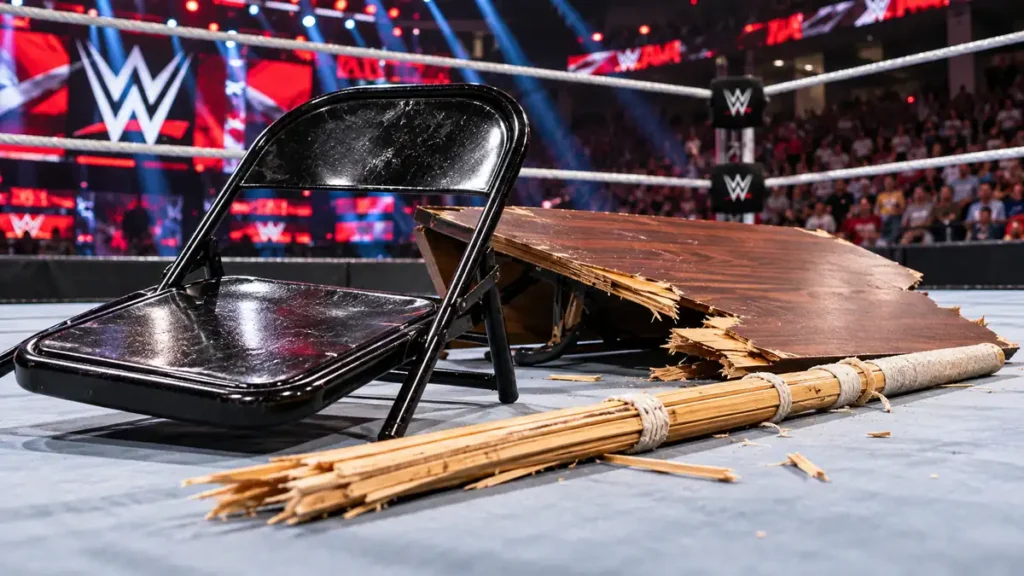
The steel chair is the most recognized foreign object in wrestling history. These are standard commercial folding chairs made of steel.
- How They Are Used: Superstars aim strikes at the broad, muscular areas of the upper back and shoulder blades, avoiding direct contact with the spine.
- The Safety Policy: The Safety Policy: Following modern concussion awareness and policy updates outlined in WWE’s Talent Wellness Program guidelines, the company officially prohibited unprotected chair shots directly to the head. Today, chair strikes are taken across the back or blocked with the hands.
- The Reality: Even when delivered properly across the back, flat chair shots cause real pain, heavy bruising, and lingering muscle soreness.
2. Kendo Sticks (Shinai)
Originally popularized in American wrestling by ECW and later used frequently in WWE by stars like Steve Blackman and Tommy Dreamer, the kendo stick is a traditional Japanese bamboo practice sword.
Promoters and performers favor the weapon for its distinct sound and visual effect. Because the weapon consists of bundled bamboo slats, it produces a sharp, loud crack on impact. The flexible bamboo leaves visible red welts and stinging marks across the skin, giving matches an intense look without relying on heavy blunt objects.
3. Wooden Tables
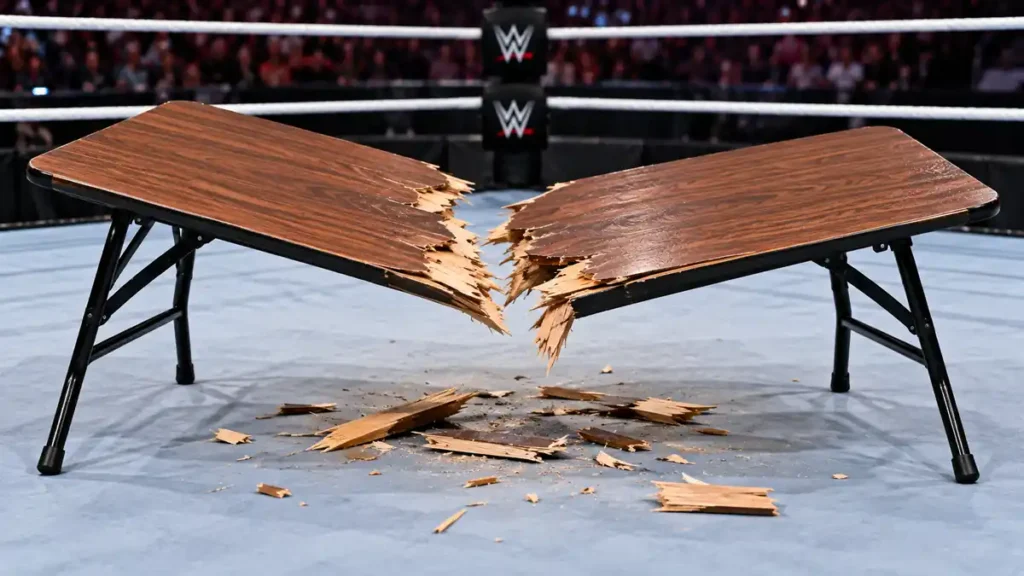
Crashing through a table from the ring or top turnbuckle is a staple of hardcore wrestling, heavily popularized during the Attitude Era by tag teams like The Dudley Boyz.
- Construction: WWE uses commercial banquet-style folding tables, usually constructed from thin wood composite rather than heavy solid lumber.
- How the Spot Works: The table is intended to break in the center under the combined weight and impact of the performers. When it snaps cleanly, the break breaks the fall across a wider surface area.
- The Risk: If the table does not snap, or if a wrestler lands awkwardly against the outer metal frame or folding leg brackets, severe rib and joint injuries can occur.
4. The Sledgehammer

Triple H made the sledgehammer his trademark weapon beginning in the late 1990s, using it as an intimidation tool in high-profile rivalries.
Inside the ring, performers handle the tool with extreme caution to prevent genuine blunt-force trauma. During televised matches, wrestlers typically grip the tool close to the head and deliver forward thrusts rather than uncontrolled, full-force swings. Unrestricted swings are kept away from live opponents and directed at inanimate objects, such as sets, staging, or ambulances.
5. Ring Steps
The steel steps positioned at the corners of the ring are among the most unforgiving objects at ringside.
Because the solid metal offers no give, taking a bump into the steps requires complete focus from the defending wrestler. Superstars rely on their boots, shins, and forearms to take the brunt of the collision against the flat face of the steel, keeping their head and face away from the hard edges.
6. Ladders
Showcased in match types like Money in the Bank and the classic Tables, Ladders, and Chairs (TLC) history documented on CAGEMATCH, ladders serve as both a platform and an offensive weapon.
Wrestling promotions use sturdy metal industrial ladders. Because the narrow rungs and side rails offer zero padding or flex, falls onto the ladder structure frequently cause deep bruising, lacerations, and limb sprains.
Also Read
- AJ Styles vs Christopher Daniels vs Samoa Joe: TNA Classic Breakdown
- Undertaker vs Shawn Michaels WrestleMania 25: The Anatomy of a Classic
- WWE Intercontinental Championship History: Legacy, Greatest Champions & Evolution
7. Real Thumbtacks
While rarely featured on modern WWE programming, thumbtacks remain a defining element of classic hardcore wrestling, famously used in bouts involving Mick Foley, Randy Orton, and Edge.
The tacks used in these spots are standard metallic office tacks. When a performer lands on them, the sharp points puncture the skin across the back, arms, or shoulders. Beyond the immediate pain, the extraction process after the match is uncomfortable and requires immediate antiseptic cleaning to prevent infection.
8. Barbed Wire Bats
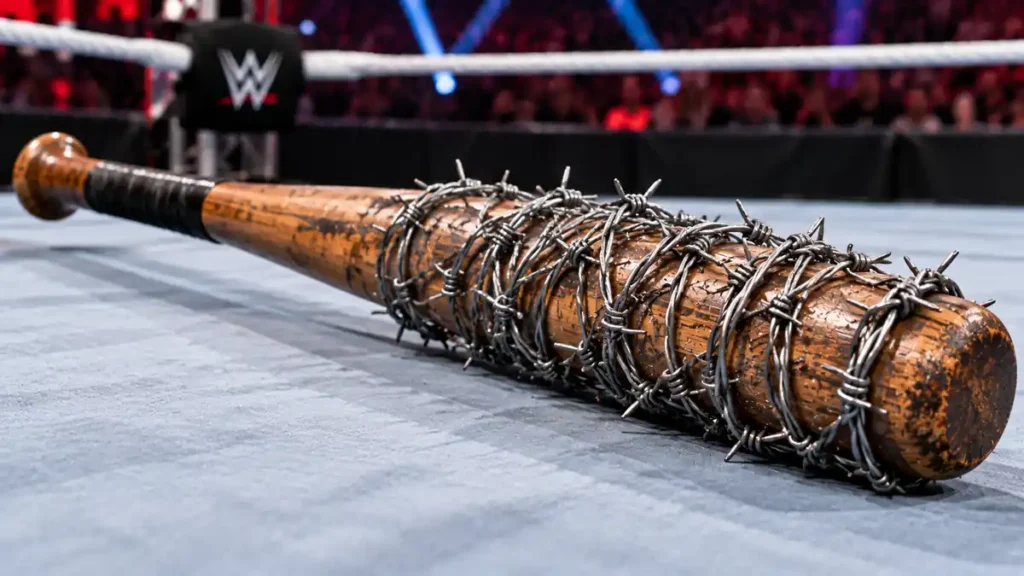
Popularized in mainstream wrestling by Mick Foley under his Cactus Jack persona, the barbed wire baseball bat became a symbol of extreme rules matches.
While the wire wrapped around the wood may be modified or arranged to minimize deep punctures, the sharp prongs can still snag the skin. A direct strike frequently results in surface scratches, torn ring gear, and genuine bleeding.
9. Metal Trash Cans
A regular staple of WWE’s Hardcore Championship division, metal trash cans and lids remain popular because they make an unmistakable crash upon impact.
These cans are made from relatively thin metal, allowing them to bend and dent easily during a strike. The collapsing metal helps disperse the force of the blow while generating maximum noise. However, dented cans develop jagged edges, which can cause accidental cuts during fast-paced ringside brawls.
| Weapon & Material | In-Ring Usage | Primary Risk |
| Steel Chair (Commercial folding steel) | Flat strike across upper back muscles | Deep bruising and muscle soreness |
| Kendo Stick (Bundled bamboo slats) | Flexible striking across flesh | Red welts and stinging marks |
| Wooden Table (Thin composite wood) | Snaps in center to spread the fall | Striking outer metal frame or legs |
| Sledgehammer (Heavy steel tool) | Controlled thrusts with close hand grip | Impact to the ribs or face |
| Ring Steps (Solid industrial steel) | Cushioned using boots and forearms | Blunt force trauma and sprains |
| Ladders (Reinforced metal) | Sturdy platform with narrow rungs | Bruises, sprains, and cuts |
Also Read
- TNA X-Division History: How TNA Redefined High-Flying Wrestling
- Seth Rollins Heel Turns: Complete WWE History & Timeline Explained
The Reality Behind the Props
The predetermined nature of professional wrestling sometimes leads casual viewers to assume that every object featured in extreme rules stipulations on WWE.com is completely harmless. In reality, working with foreign objects requires timing, athletic control, and high pain tolerance.
From the sting of a bamboo kendo stick to the dead stop of a steel chair, WWE Superstars rely on strict technique to deliver memorable moments safely. The storylines may be scripted entertainment, but the physical impact of these weapons is undeniably real.
Specific Reference Mapping
- WWE Concussion & Chair Policy: Covered in WWE’s official Corporate Talent Health and Wellness documentation, detailing the prohibition of direct, unprotected head strikes.
- Hardcore Props & Thumbtacks: Documented in Mick Foley’s autobiography Have a Nice Day: A Tale of Blood and Sweatsocks, specifically detailing the physical toll of thumbtacks and barbed wire during his 1990s matches.
- Match Database & Stipulations: Verified via CAGEMATCH’s match database across TLC and Extreme Rules historical records.

About Gaurav Sharma
I am Gaurav Sharma, founder and the only writer at Wrestling Nightmare. I live in Punjab, India. I have watched professional wrestling since 2000, and for the last 15 years I have followed dirtsheet reporting and the difference between what is shown on screen and what is reported from backstage. I write explainers and labeled opinion on WWE, AEW, and TNA. I credit the outlet that broke a story, and I do not publish unsourced salary figures or private family pieces.
contact@wrestlingnightmare.com