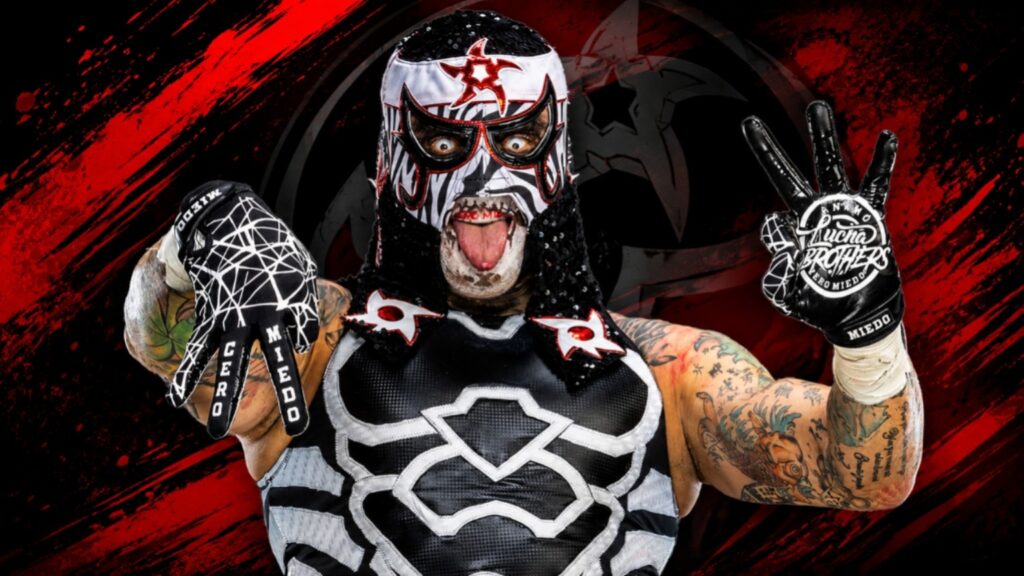
Every time Penta steps onto the ramp, arenas around the world buzz with anticipation. Before he utters a single word, he raises his hand to the crowd: his thumb and index finger touch to form an open ring, while his remaining three fingers point sharply downward. Moments later, the entire arena roars his iconic war cry: “Cero Miedo!”
Most fans instantly recognize the circle as a “zero.” But the three downward-pointing fingers often confuse casual viewers. Is it a gang sign? A tribute to three championships? Or just a dramatic ring entrance pose?
The answer is actually hidden in plain sight: it is a physical letter-spelling trick.
The Secret Behind the Hand Gesture: Spelling “Cero Miedo”
The gesture is not random flair; it is a literal visual translation of Penta’s catchphrase:
- The Circle (O): The index finger touching the thumb creates the number zero, representing “Cero” (Zero).
- The Three Extended Fingers (M): When pointed downward, the middle finger, ring finger, and pinky visually mimic the letter “M”, representing “Miedo” (Fear).
Together, the hand physically spells out “0 – M” (Cero Miedo / Zero Fear).
It is one of the most brilliant visual signatures in modern professional wrestling because it breaks through all language barriers. Fans in Mexico, Japan, and the United States can perform the exact same hand motion and immediately connect with the character without needing a translation.
Where Did “Cero Miedo” Actually Come From?
Many fans assume Penta crafted the phrase from scratch in a creative meeting, but the roots trace back to Mexican culture.
Growing up, Penta frequently listened to Mexican corrido music—specifically tracks by the popular group Los Buitres de Culiacán Sinaloa. In their music, the slang phrase “Cero miedo, mi compa” (“Zero fear, my friend”) appears frequently as an expression of grit and resilience.
The phrase stuck with him. During his early days in Mexico’s AAA promotion, a promoter casually asked Penta backstage how he felt ahead of an upcoming match. Penta simply shrugged and replied: “Cero Miedo.”
The response felt so natural that he brought it to television. Within months, Mexican crowds began chanting it back to him. Penta realized he had struck gold, soon stamping the slogan across merchandise and turning the hand gesture into his permanent calling card.
Defying the “Pentagón Curse”
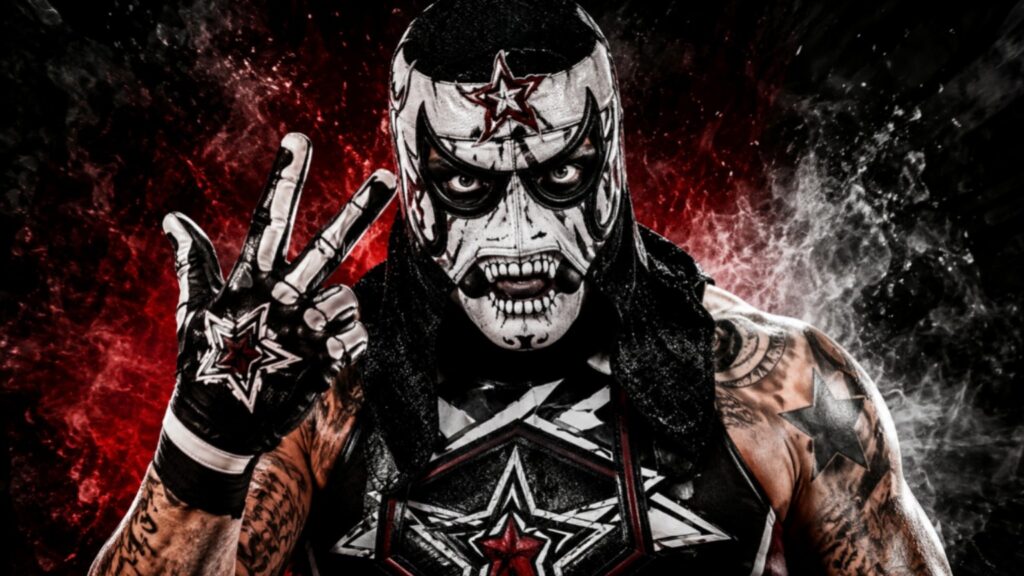
For Penta, the hand sign is far more than a marketing slogan. It represents his personal defiance against one of the most persistent superstitions in lucha libre history.
In Mexican wrestling, the Pentagón moniker was long believed to be cursed:
- The original Pentagón (Jesús Andrade Salas) suffered severe, life-altering injuries in the ring during the late 1990s.
- Subsequent performers who donned the mask faced chronic injuries, personal turmoil, or sudden career stalls.
When Penta was handed the Pentagón Jr. character in 2013—after previously working under names like Zaius and Dark Dragon—he inherited that dark reputation alongside the mask.
Adopting “Cero Miedo” was his way of stating publicly that superstition would not dictate his fate. By literally flashing “Zero Fear” every night, he made a psychological vow to rewrite the legacy of the mask on his own terms.
From Underground Phenom to Global Stardom
Penta’s rise with the Cero Miedo mantra took over a decade of relentless grind across multiple continents:
- Lucha Underground (2014–2018): Penta became an international cult sensation, engaging in legendary, violent feuds against stars like Vampiro and his real-life brother, Rey Fénix.
- The Lucha Brothers Era: Alongside Fénix, Penta dominated global tag team divisions, capturing titles across Impact Wrestling, PWG, Ring of Honor, and AAA.
- AEW & Death Triangle: In All Elite Wrestling, the brothers captured the AEW World Tag Team Championships and later aligned with PAC to form the dominant Death Triangle faction.
- The WWE Jump: By the time Penta took his talents to WWE’s flagship brand Monday Night Raw, he didn’t need to alter his identity or gimmick. The Cero Miedo brand was already globally established.
(Related Read:
WWE Grand Slam Champions: Full List and How It’s Achieved (2026)
How Seth Rollins Reinvented Himself: Seth Rollins Character Reinventions Explained
7 WWE Wrestlers Who Changed Gimmicks and Became Global Icons)
How the Gesture Infiltrated the NFL
Penta’s influence eventually broke out of the squared circle and crossed into mainstream American sports culture.
San Francisco 49ers superstar tight end George Kittle, an avid professional wrestling fan, discovered Penta during an independent show over WrestleMania weekend. Kittle was so inspired by Penta’s intensity and charisma that he began flashing the signature “Zero and M” gesture as his first-down celebration on NFL Sundays.
The tribute evolved into a genuine friendship. The two athletes have appeared together at public events, with Penta famously presenting Kittle with a custom lucha libre mask adorned in the 49ers’ red and gold team colors.
Seeing 70,000 NFL fans react to a celebration born in the Mexican independent circuit proves just how magnetic the symbol really is.
Editorial Take: Why Simplicity Wins in Wrestling
In an era where wrestling characters often lean on intricate, twenty-minute promos and over-complicated storylines, Penta is a masterclass in visual economy.
He does not need lengthy monologues to establish his presence. Two words and a three-finger fold tell you everything you need to know about his mindset, his background, and his threshold for pain.
Very few wrestlers successfully transfer an independent wrestling gimmick directly to global television networks without corporate rebranding. Penta carried Cero Miedo across eight major promotions, through language barriers, and into the highest levels of pro sports. That isn’t just good branding—it is iconic character work.

About Gaurav Sharma
I am Gaurav Sharma, founder and the only writer at Wrestling Nightmare. I live in Punjab, India. I have watched professional wrestling since 2000, and for the last 15 years I have followed dirtsheet reporting and the difference between what is shown on screen and what is reported from backstage. I write explainers and labeled opinion on WWE, AEW, and TNA. I credit the outlet that broke a story, and I do not publish unsourced salary figures or private family pieces.
contact@wrestlingnightmare.com