
WWE disqualification rules confuse a lot of fans, and you have probably seen why at least once. A challenger gets the win over the champion, the referee raises a hand, and the champion still walks out with the belt. It feels like a mistake the first time. It isn’t. Three match endings work differently from a pin or a submission: disqualification, count-out and no contest.
A quick honest note before we start. WWE doesn’t publish a full rulebook for fans. What we call WWE match rules are customs the company follows on its shows, and it can bend them whenever a storyline needs it. So this guide explains how each ending usually works, and it leans on WWE’s own match reports wherever possible.
How a Normal WWE Match Ends
Most matches finish one of four ways. A rules guide written for WrestleMania 41 lists pinfall, submission, count-out and disqualification. A pinfall is a three-count with the opponent’s shoulders on the mat. A submission is a tap out, or passing out in a hold.
Count-out and disqualification are the odd ones. In both, somebody wins because their opponent broke a rule, not because they were beaten in the ring.
What Is a Disqualification (DQ)?
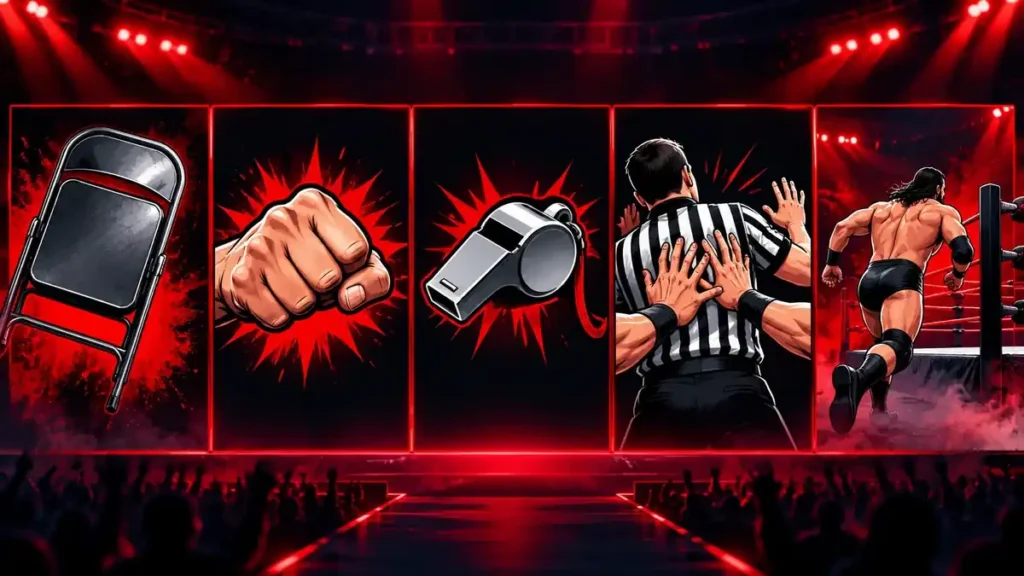
A DQ happens when a wrestler breaks the rules and the referee stops the match. The rule-breaker loses.
These are the usual causes:
- Weapons. A chair or any other foreign object is banned in a standard match. Chair use has changed a lot over the years, and we covered why WWE banned chair shots to the head.
- Illegal strikes. A low blow is the classic example.
- Ignoring warnings. Referees normally warn first. Keep ignoring the official and you can lose the match.
- Attacking the referee. The Sportster notes that putting hands on an official can mean an instant DQ.
- Outside interference. If a manager or another wrestler jumps in, the person getting the help can lose.
Referees also use a five-count when a wrestler uses an illegal move, like choking. The wrestler has to break the hold before five. On TV, officials often count slowly, which is why so many matches feel like they are one second away from a DQ.
SummerSlam 2018 gives us a clean example. WWE.com’s report says Samoa Joe beat WWE Champion AJ Styles by disqualification. Joe had taunted Styles’ family, Styles snapped, and he hit Joe with a steel chair. Those two share a long history from their TNA days, which we broke down in our look at the AJ Styles vs Christopher Daniels vs Samoa Joe TNA classic.
What Is a Count-Out?
A count-out is about staying outside the ring too long. The WrestleMania 41 rules guide says it happens when a wrestler can’t get back in before the referee reaches ten.
The rule stops anyone from simply walking away from a losing match. WhatCulture points out that referees are often lenient so fans can enjoy a brawl around ringside. Heels also use the rule on purpose. Walking out of a match is the quickest way to get boos.
Why a Champion Usually Keeps the Title
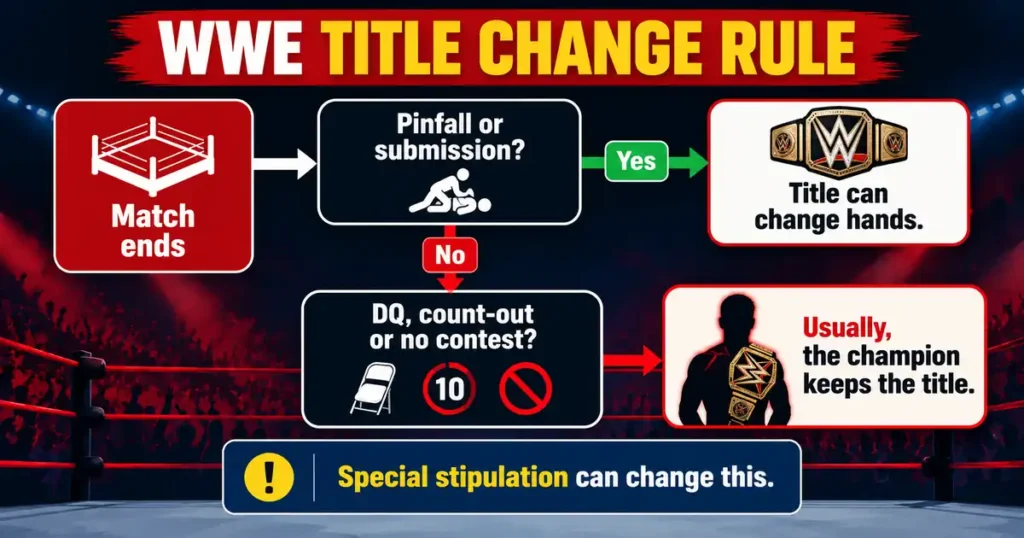
This is the part that trips up new fans. Under the usual WWE title-match convention, a championship doesn’t change hands by DQ or count-out. The champion can lose the match and still keep the belt. A pinfall or a submission is needed to win the title.
WWE.com has explained this itself. After Dolph Ziggler beat CM Punk by count-out in January 2012, WWE’s report reminded fans that the WWE Championship can’t be won that way. Ziggler ran off with the belt, but Punk was still the champion.
The SummerSlam 2018 match worked the same way. In the report we mentioned above, WWE.com says the chair attack cost Styles the match but not his title.
There’s one big exception: special conditions. WWE can announce a stipulation that overrides the usual rule. Before Elimination Chamber 2013, Wrestling Rumors reported that The Rock would lose the WWE Championship to CM Punk if he got counted out or disqualified. That caught people off guard because it broke the normal practice.
What Is a No Contest?
A no contest means the match ends with no winner and no loser. A DQ is different, because there one person takes the blame for breaking a rule.
It usually happens when a fair finish is no longer possible. Outside chaos can take over, or both wrestlers can be unable to continue.
A notable example is Hell in a Cell 2018. WWE.com’s results page confirms that the main event between Roman Reigns and Braun Strowman ended in a no contest after Brock Lesnar attacked both men. UPI reported that a replacement referee called the match off, and Reigns stayed Universal Champion.
For WWE, this ending can be handy. It can stop a match without making either star look weak, and it often leads to a rematch.
Why the Referee Decides Everything
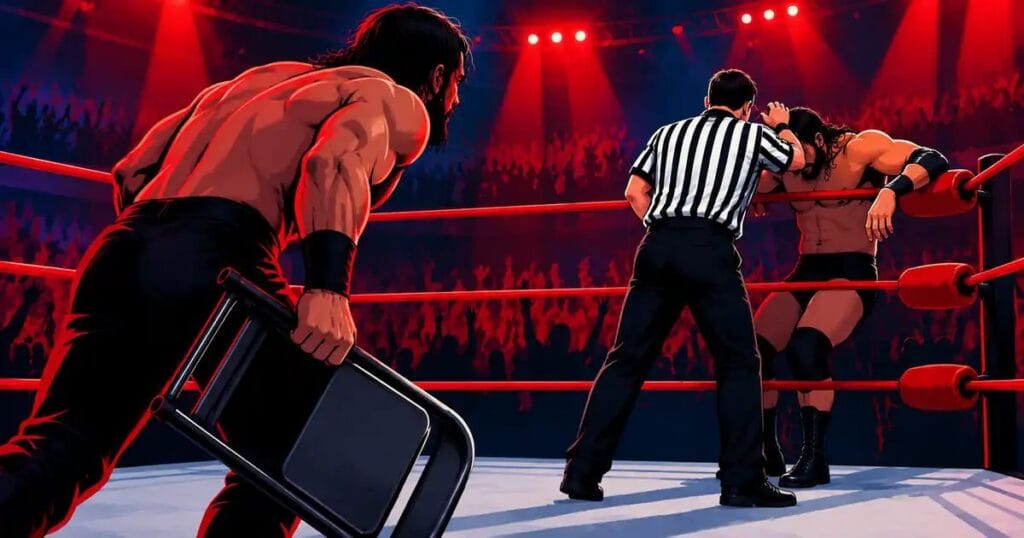
In WWE, a rule only counts when the referee sees the problem. That’s why wrestlers wait for the official to turn around before they grab a weapon or help a partner. The Sportster notes that a tag counts only when the referee sees it. Cheating works the same way in WWE storylines.
Where the referee stands can even change a result. The 2018 Styles and Joe feud shows this. After the SummerSlam DQ in August, they met again at Hell in a Cell on September 16. The Sportster reported that Styles tapped out before he pinned Joe, but the referee missed it because of his position, so the title didn’t change hands. WWE then booked a No Disqualification match for their next title meeting at Super Show-Down on October 6.
When a referee gets knocked out, officials often send in a replacement. At that same Hell in a Cell event, in the Reigns and Strowman main event, UPI wrote that the replacement referee made the call to end it. So next time you watch, keep an eye on the referee. What he sees shapes the finish.
Quick Comparison
| Ending | What happens | Who wins? | Does the title change? |
|---|---|---|---|
| DQ | A rule is broken | The opponent | Usually no |
| Count-out | A wrestler stays out past ten | The wrestler in the ring | Usually no |
| No contest | The match can’t finish fairly | Nobody | Usually, the champion retains |
“Usually” matters here, because a special stipulation can change the outcome.
Matches That Remove These Rules
Some match types throw DQ and count-out out completely.
- Extreme Rules. WWE.com’s stipulation guide says this match has no disqualifications and no count-outs, so weapons are legal.
- Last Man Standing. The same WWE.com guide says there are no DQs, count-outs, pinfalls or submissions. You win by keeping your opponent down for the referee’s ten count.
- Falls Count Anywhere. WhatCulture notes that count-outs can’t apply, because the fight can go anywhere.
- Fist Fight. In 2019, TheWrap reported that WWE’s first Fist Fight had no DQ, count-outs, pinfalls or submissions. It ended when the referee decided one team couldn’t continue.
Why These Rules Matter to Fans
Once you know these endings, WWE storytelling gets easier to read. A heel champion smirking after a DQ makes sense. A count-out win for a challenger tells you the title story isn’t over. A no contest tells you a rematch is probably coming.
WWE uses these rules to protect champions, build rivalries and keep you tuned in for the next match.
Final Thoughts
Disqualification punishes rule-breaking. Count-out punishes staying outside too long. A no contest means nobody wins. In a normal title match, none of them usually moves the championship, though WWE can add a stipulation that changes that. Always check the rules announced before the bell.
Want more explainers like this one? Browse our WWE section for more match rules, history and behind-the-scenes breakdowns.
Sources
Official WWE sources:
- WWE.com: Samoa Joe def. WWE Champion AJ Styles by disqualification (SummerSlam 2018)
- WWE.com: Come back with that title, Dolph! (Raw, January 2, 2012)
- WWE.com: Roman Reigns vs. Braun Strowman ended in a No Contest (Hell in a Cell 2018)
- WWE.com: Guide to Extreme Rules stipulation matches

About Gaurav Sharma
I am Gaurav Sharma, founder and the only writer at Wrestling Nightmare. I live in Punjab, India. I have watched professional wrestling since 2000, and for the last 15 years I have followed dirtsheet reporting and the difference between what is shown on screen and what is reported from backstage. I write explainers and labeled opinion on WWE, AEW, and TNA. I credit the outlet that broke a story, and I do not publish unsourced salary figures or private family pieces.
contact@wrestlingnightmare.com